Portfolio Architecture

A structured map of the digital portfolio, organized for governance, scalability, and execution.

Metallic lattice framework illustrating interconnected structural nodes representing the architecture of the Interface International portfolio.

Portfolio Overview

Interface International maintains a structured portfolio of digital properties designed to operate as a governed system. The portfolio is organized to support clear ownership, repeatable publishing, measurable performance, and controlled expansion.

Each property is treated as an operational asset, built on standardized components and managed through a consistent lifecycle.


Architecture Principles

• Standardized structural templates
• Defined content and commerce pathways
• Measurable performance controls
• Controlled expansion through repeatable systems

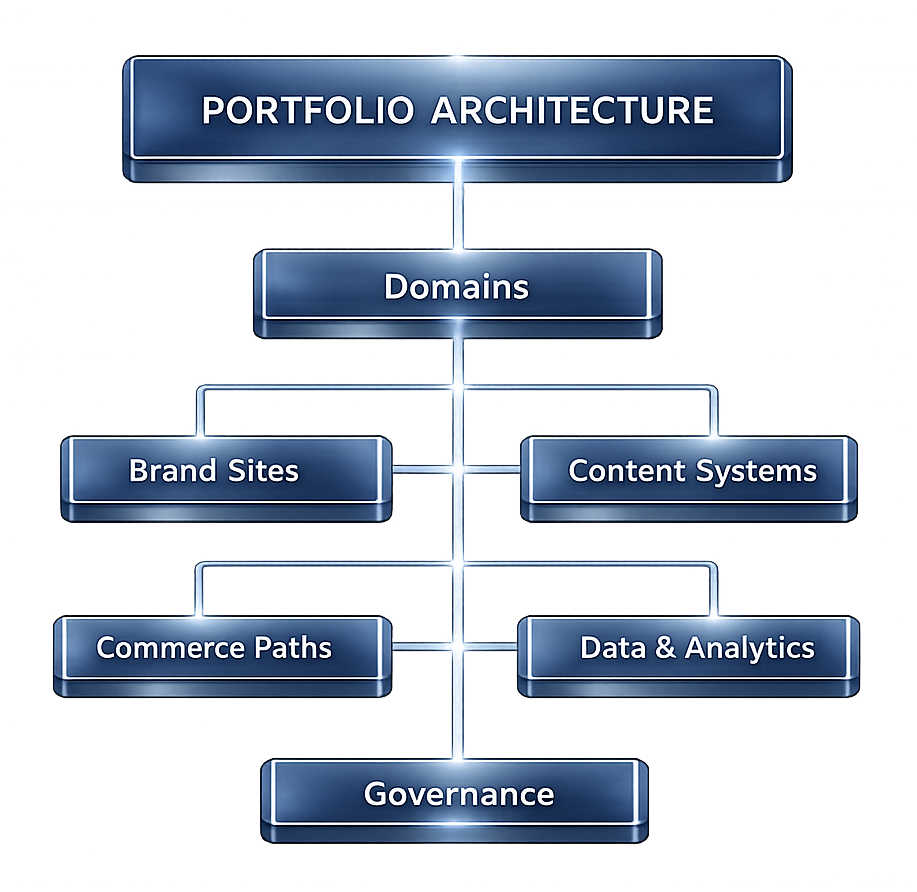
Portfolio Architecture Layers

Domains

Primary domain properties that establish category presence, audience focus, and long-term portfolio positioning.

Brand Sites

Structured brand environments built on standardized templates to deliver consistent presentation and operational control.

Content Systems

Publishing frameworks designed to support repeatable content creation, organization, and long-term knowledge development.

Commerce Paths

Defined pathways that connect audiences to products, services, and information resources through measurable conversion routes.

Data & Analytics

Measurement systems that track engagement, performance, and portfolio health across all digital properties.

Governance

Standards, controls, and operating procedures that ensure the portfolio expands in a disciplined and sustainable manner.

Diagram illustrating the Interface International portfolio architecture showing Domains, Brand Sites, Content Systems, Commerce Paths, Data & Analytics, and Governance.

Portfolio Categories

Sales

Properties supporting structured product distribution, channel development, and revenue-generating portfolio initiatives.

Marketing

Properties designed to support audience acquisition, brand visibility, and sustained demand generation.

End-User Interests

Properties oriented toward practical consumer needs, product exploration, and everyday utility categories.

Personal Development

Properties focused on behavioral improvement, mindset development, and long-term personal advancement.

Personal Care

Properties centered on self-care practices, wellness habits, and lifestyle maintenance.

Metaphysical Studies

Properties exploring philosophical systems, symbolic frameworks, and conceptual models of human understanding.

Publishing

Properties that develop, organize, and distribute structured editorial and intellectual content.

Digital Solutions

Properties focused on digital tools, systems, and operational resources that support portfolio performance.

Governance & Standards

Structural Templates

All portfolio properties are built using standardized page structures and component systems to ensure consistency and operational efficiency.

Naming & Domain Standards

Domains, categories, and brand environments follow defined naming conventions that support clarity, discoverability, and long-term portfolio organization.

Content Governance

Publishing environments operate under structured editorial frameworks designed to maintain quality, relevance, and long-term knowledge value.

Performance Measurement

Portfolio initiatives are evaluated using defined metrics and analytics systems to monitor engagement, growth, and operational effectiveness.

Operational Discipline

Digital properties are developed and maintained using repeatable operational processes that support reliability and controlled expansion.

Portfolio Stewardship

All environments are managed with long-term stewardship in mind, ensuring the portfolio evolves in a structured and sustainable manner.

Interface International structures portfolio assets as governed systems designed for scalable execution.